Cardiovascular conditioning
Sustained, dog-selected movement can raise heart rate more consistently than a stop-start neighborhood walk.
The method
A slatmill is not an electric treadmill. Your dog powers the belt and remains in full control of every start, stop and change of speed. We guide duration and watch movement; we never force a pace.
The key difference
A powered treadmill moves beneath a dog at a speed selected by a person. Our slatmills work in the opposite way: the dog's stride turns the belt.
When the dog slows, the belt slows. When the dog stops, the belt stops. There is no motor to pull the feet backward and no programmed pace to keep up with.
This gives the handler room to focus on posture, breathing, gait and confidence while the dog retains control of the movement itself.
There is no electric motor beneath the deck. The slat belt moves only when the dog chooses to move, letting them start, stop, walk or run at their own natural speed.
A freely moving slat belt encourages all four feet into a natural, repeatable rhythm without forcing a preset speed. Over time, that can support balanced conditioning.
The purpose-built canine deck has no curbs, jarring lead pulls or sudden turns after a squirrel. Because the dog controls the movement, there is no motor pushing them beyond their chosen pace.
Choosing and maintaining movement on a self-propelled slatmill requires focus. Most dogs come off settled rather than wired — the calm-after-effect owners often notice first.
Safety
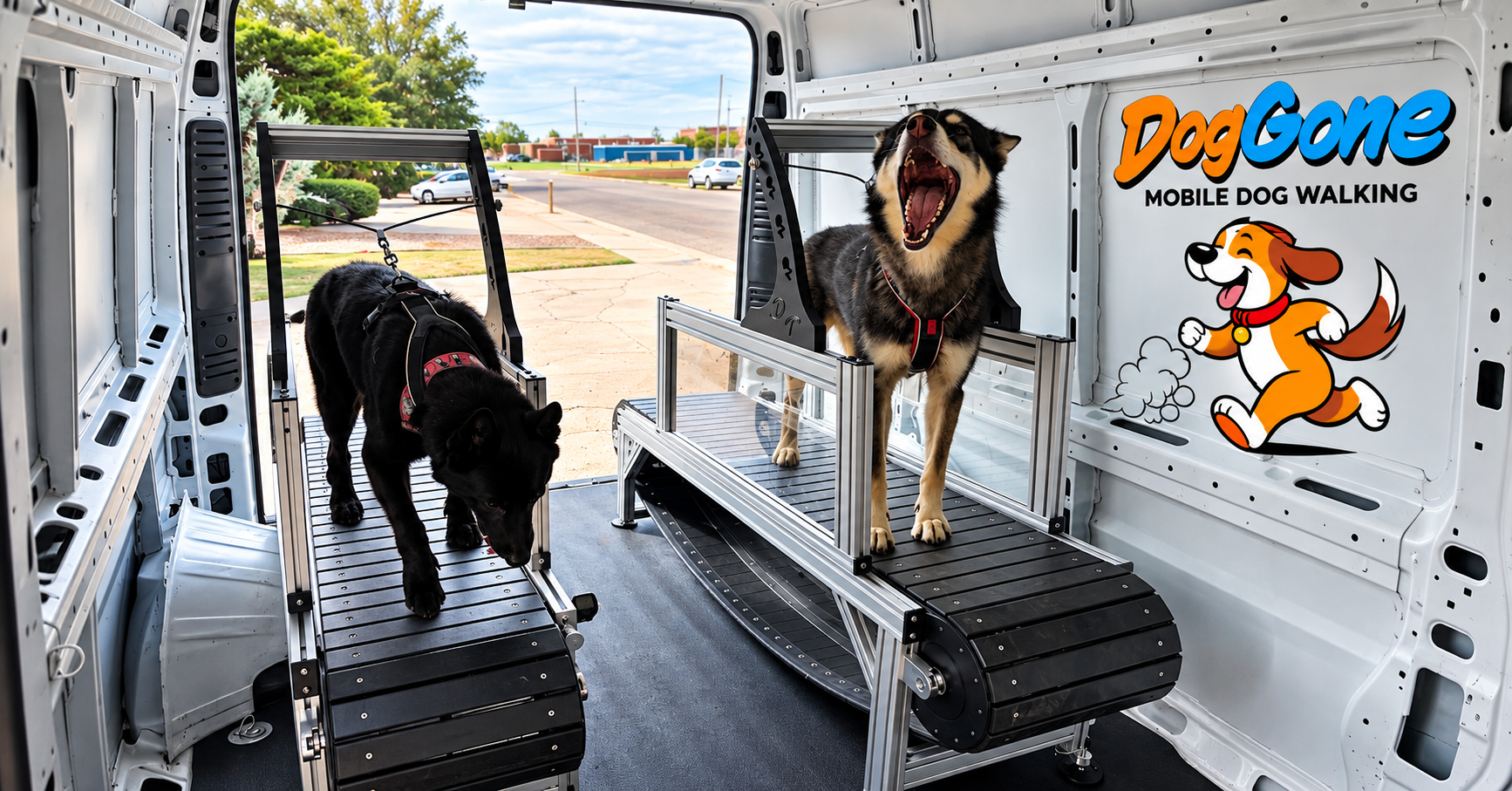
A real tandem session: two slatmills, two harnessed dogs, each belt moving only because its dog moves it.
Handler protocol
We continuously monitor gait, breathing, posture, paw placement and willingness. Duration increases only after a dog shows relaxed, repeatable movement and a comfortable recovery.
Fitness science
Sustained, dog-selected movement can raise heart rate more consistently than a stop-start neighborhood walk.
The rolling slat surface asks the hips, glutes and rear legs to contribute through each stride while the dog controls effort.
Moving the slats requires body awareness, foot placement and concentration, adding mental work to physical exercise.
We track comfortable duration, gait quality, recovery and confidence rather than chasing an artificial machine speed.
Building up
Week 1
Introduction. Treats on a stationary slatmill, then a few minutes of dog-led movement.
Week 2
8–10 minutes while your dog finds a comfortable, natural rhythm.
Week 3
12–15 minutes, with your dog free to vary speed or stop whenever needed.
Week 4
Up to a full 15–18 minute block when comfortable, followed by a progress note.
Every dog moves at their own speed and plenty take longer. If yours is recovering from surgery or managing a diagnosed condition, we ask for your vet's guidance before the first session and work to it.
Book an intro session